
This year, GM grabbed the world’s attention with a bold proclamation to become carbon neutral by 2040, led by their vision of a future with zero vehicle tailpipe emissions. We go inside this vision, how the company aims to get there, and what it means for America and the world.
Every auto company likes to talk about how fast their cars can accelerate. GM estimates its upcoming GMC Hummer EV will rocket from 0 to 60 in approximately 3 seconds (based on initial vehicle movement), but the company is focused not only on how fast its new EVs can go but on how quickly GM itself can accelerate into the future.

GM invites “Everybody In” to a future filled with smart, clean, safe, and powerful electric vehicles. Source: General Motors
In its Exhibit Zero experience at CES 2021, GM Chairman and CEO, Mary Barra, showed off the technology the company is rolling out this year, including the Ultium Battery Platform and the GMC Hummer EV. GM also launched a new marketing campaign inviting “Everybody In” to an all-electric future. Deborah Wahl, GM’s Global Chief Marketing Officer, announced the new campaign by declaring that GM is well-positioned to offer “the solutions, capability, technology, and scale to put everyone in an EV.”
But those words were just the beginning. GM was about to make a major announcement that would point the company in a new direction and shake up the auto industry forever.
Going All-In on EVs

Under the leadership of Chairman and CEO, Mary Barra, GM is aiming toward a carbon-neutral, all-electric future. Source: General Motors
On January 28th, General Motors and Mary Barra announced plans to become carbon neutral in its global products and operations by 2040, as well as spelled out an all-electric vision that included the aspiration to eliminate tailpipe emissions from all new light-duty vehicles by 2035.
Mary Barra, Chairman and CEO, General Motors
Put simply, we hoped to provide a roadmap for how our world can transition to zero emissions and to set an example of responsible leadership. I want to extend that commitment.
As one of the world’s largest automakers, General Motors has an important role to play. That’s why we set a bold aspiration to eliminate tailpipe emissions from light-duty vehicles by 2035.
Gerald Johnson, GM’s Executive Vice President, Global Manufacturing
We really expect we’re going to see an all-EV future. And not just see it—we want to lead that future.
Put simply, we hoped to provide a roadmap for how our world can transition to zero emissions, and to set an example of responsible leadership.

Mary Barra, Chairman and CEO, General Motors
Adam Jonas, Morgan Stanley’s Head of Global Auto & Shared Mobility Research
What Mary Barra and her team are doing at GM may be one of the most profound strategic turnarounds—not just in the auto industry, but in business.
Mike Bowsher, Chairman, Chevrolet National Dealer Council
I've represented dealers for about 8 to 10 years through different divisions, and I spend quite a bit of time in Detroit. So I [had a feeling] of where things are heading. GM has made a huge commitment on the EV side of the business. They are investing $27 billion in this endeavor to move EVs and AVs forward. It’s a lofty goal. So far, dealers are embracing it, and that’s before they’ve even seen the EVs that are coming. When they do, it’s going to blow their minds.
How GM Plans To Get There
It’s one thing to design a great electric vehicle, but it’s something else altogether to manufacture hundreds of thousands or even millions of EVs per year. In October 2020, GM announced that its Detroit-Hamtramck Assembly Center would henceforth be known as Factory ZERO, a dedicated all-electric vehicle assembly plant. To power those electric vehicles, GM developed the new Ultium Battery Platform. Within GM, an essential part of the EV announcement was clearly showing how the company can deliver on that goal.

Gerald Johnson, General Motors Executive Vice President of Global Manufacturing, says Factory ZERO will reflect the company’s greatest and newest technology, where the company is investing $2.2 billion to create its first fully dedicated electric vehicle assembly plant. Source: General Motors
JOHNSON: General Motors is uniquely positioned to deliver on an all-EV future because of its manufacturing scale, expertise, and technology. And more importantly, because our forward-looking products have earned the trust and loyalty of our many customers.
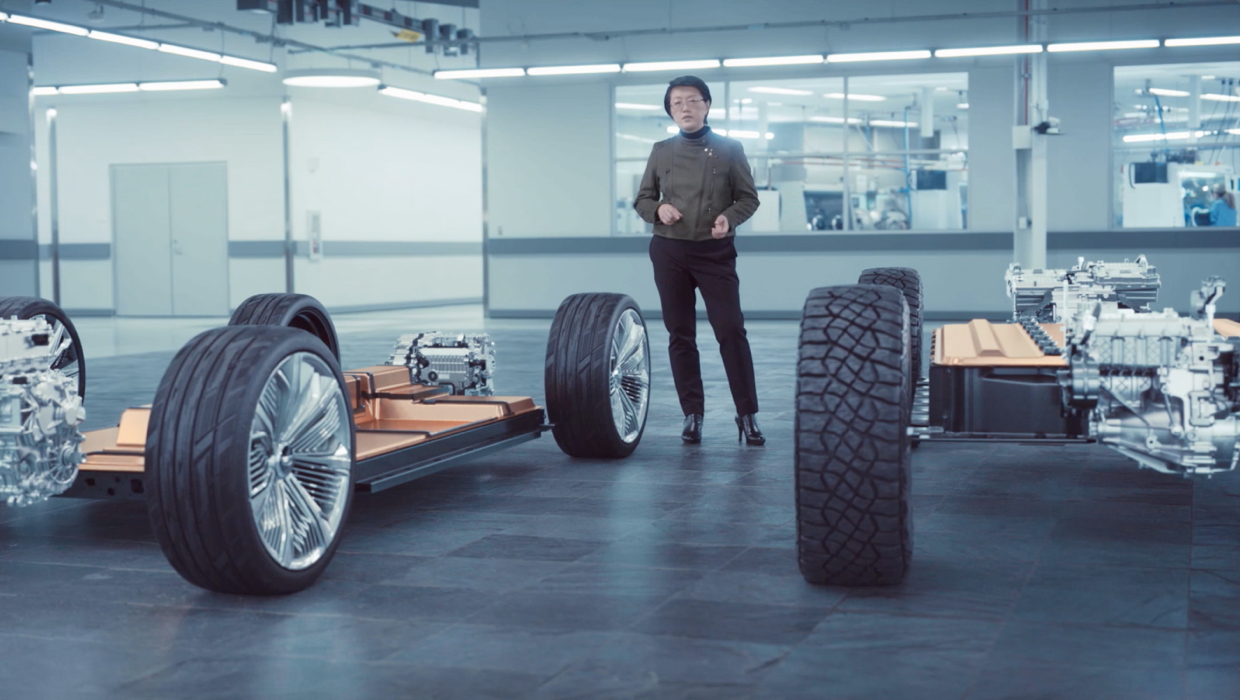
GM scientists, such as Lab Group Manager Mei Cai, are working hard to bring down production costs on the next generation of the advanced Ultium Battery Platform. Source: General Motors
Mei Cai, GM’s Technical Fellow and Group Lab Manager
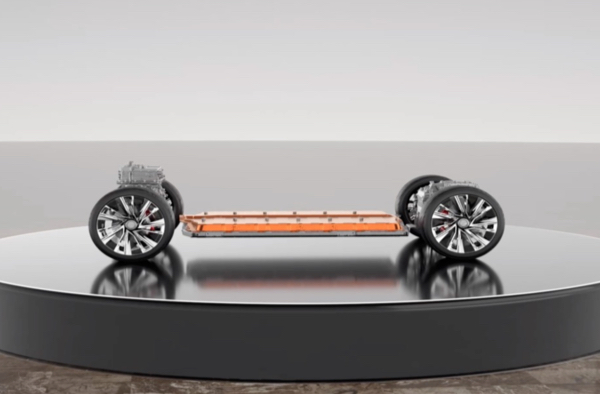
GM’s electric vehicles are built on a skateboard-style chassis that opens a whole new universe of possibilities for designers. Source: General Motors
It all starts with the battery chemistry. The Ultium Platform is a breakthrough in electric vehicle technology—and we are not finished. We are working on our next-gen high-energy battery chemistry that is expected to reduce reliance on cobalt and nickel even further while reducing costs by 60% compared to the current Bolt EV batteries.
Travis Hester, GM’s Chief Electric Vehicle Officer
The opportunities presented by advancements in technology are enormous. We’re investing not only so you can drive electric, but so you can love driving electric.
BOWSHER: If a customer says, “I don’t even know where to start on this charging thing,” we can say, “That’s easy. We have an electrician who will come out to your home and handle the install.” That’s how you get customers to adopt this technology. We sell cars to everyday people who have to rely on their cars each and every day. So we’re building a platform to get everybody the infrastructure they need where they need it most, at home, and we’re going forward as quickly as possible.
The opportunities presented by advancements in technology are enormous. We’re investing not only so you can drive electric, but so you can love driving electric.

Travis Hester, GM’s Chief Electric Vehicle Officer
BARRA: We are collaborating with our suppliers to set ambitious targets to reduce emissions, increase transparency, and source more sustainable materials, including our sustainability sub-council to share best practices, learn from one another, and create new standards for the industry. While electric vehicles do not produce tailpipe emissions, it is critical that the impact associated with production and charging is incorporated into our plans.
Geraldine Barnuevo, Senior Manager, GM Environmental Strategies and Sustainability
On that journey to zero emissions, we will keep stakeholders informed by transparently chronicling the progress we make toward our environmental goals in our annual sustainability report.
BARRA: Our team has worked tirelessly to bring General Motors to this moment. [We have] more than 155,000 employees, including engineers and builders with the technical and business expertise to solve problems and the passion to change the world.

The Ultium Battery Platform uses an almost completely wireless battery management system, eliminating the need for complex wiring schemes. Source: General Motors
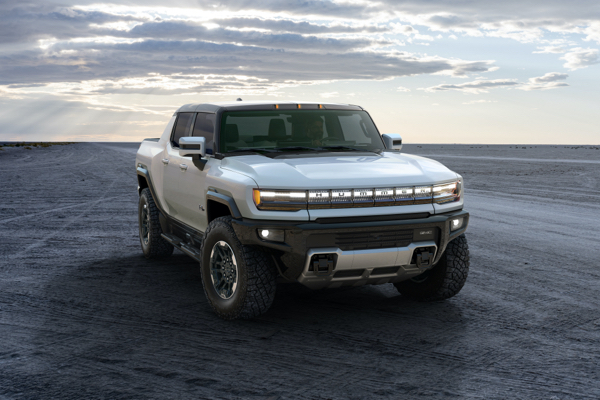
GM estimates that the GMC Hummer, scheduled to go on sale in late 2021 will offer 1,000 horsepower and an estimated 350 miles of range on a full charge. Actual range may vary based on several factors including temperature, terrain, battery age and vehicle loading, use, and maintenance. Source: General Motors
JOHNSON: I can’t wait to see Factory Zero produce its first GMC Hummer EV and Cruise Origin. The excitement, the energy, and the sense of being part of something big are tangible. This is just the beginning. We can do so much more—and we will.
The Impact of Zero
What happens when you shift from powering cars with gasoline to moving them with battery power? You open up a whole new world of design opportunities. GM is rethinking every aspect of the automotive experience and writing the next chapter in the annals of transportation.
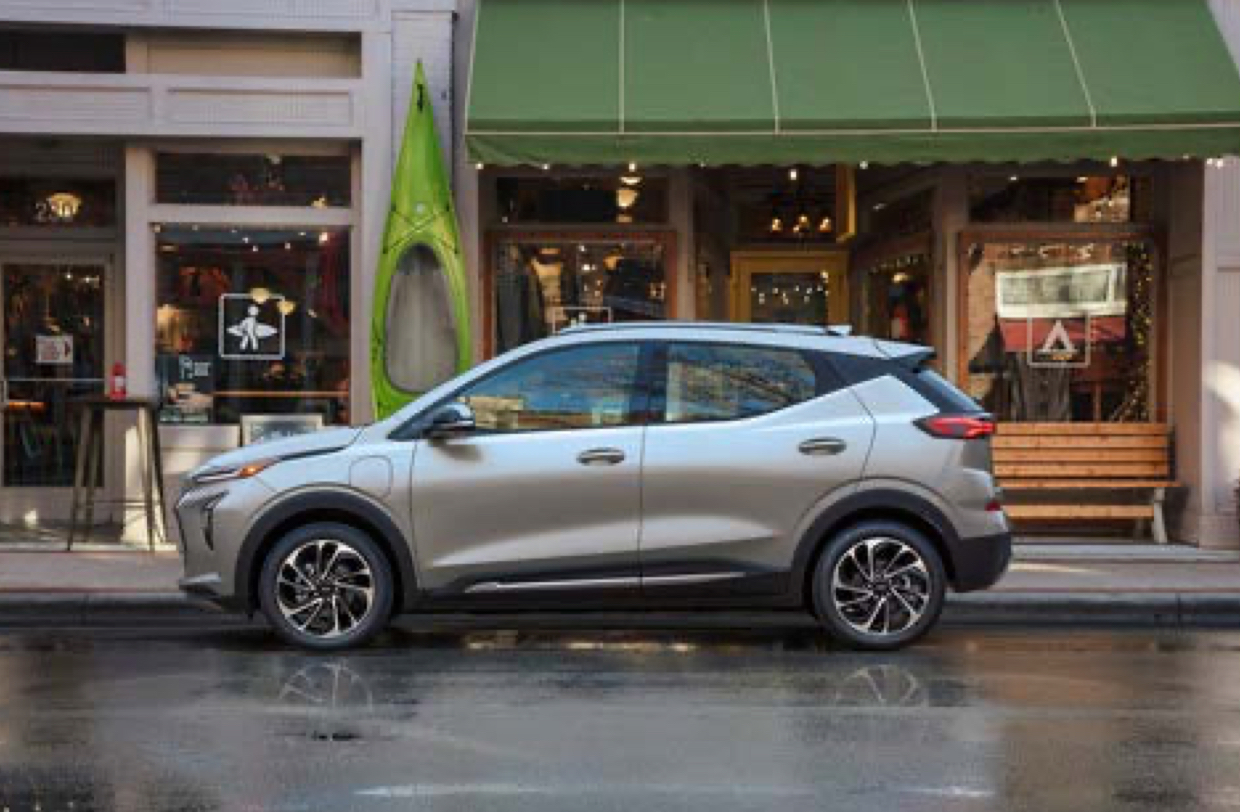
GM plugged into an electric future with the launch of the original Chevy Bolt in 2016. A newly refreshed Bolt and the new Bolt EUV will hit dealer showrooms soon. Source: General Motors
BARRA: We are in the midst of a transportation revolution. Our vehicles—and how we interact with them—are fundamentally changing, propelled by new technologies and the evolving demands of our customers’ lives. We're working to put everyone in an electric vehicle, including in pickup trucks and delivery trucks. Working with like-minded innovators will help us accelerate electric vehicle development, production, consumer adoption–and ultimately reach an all-electric future.
JOHNSON: To see the transformation and the new direction for the future that’s not only meaningful for General Motors but to the entire auto industry … that’s powerful, that’s exciting.
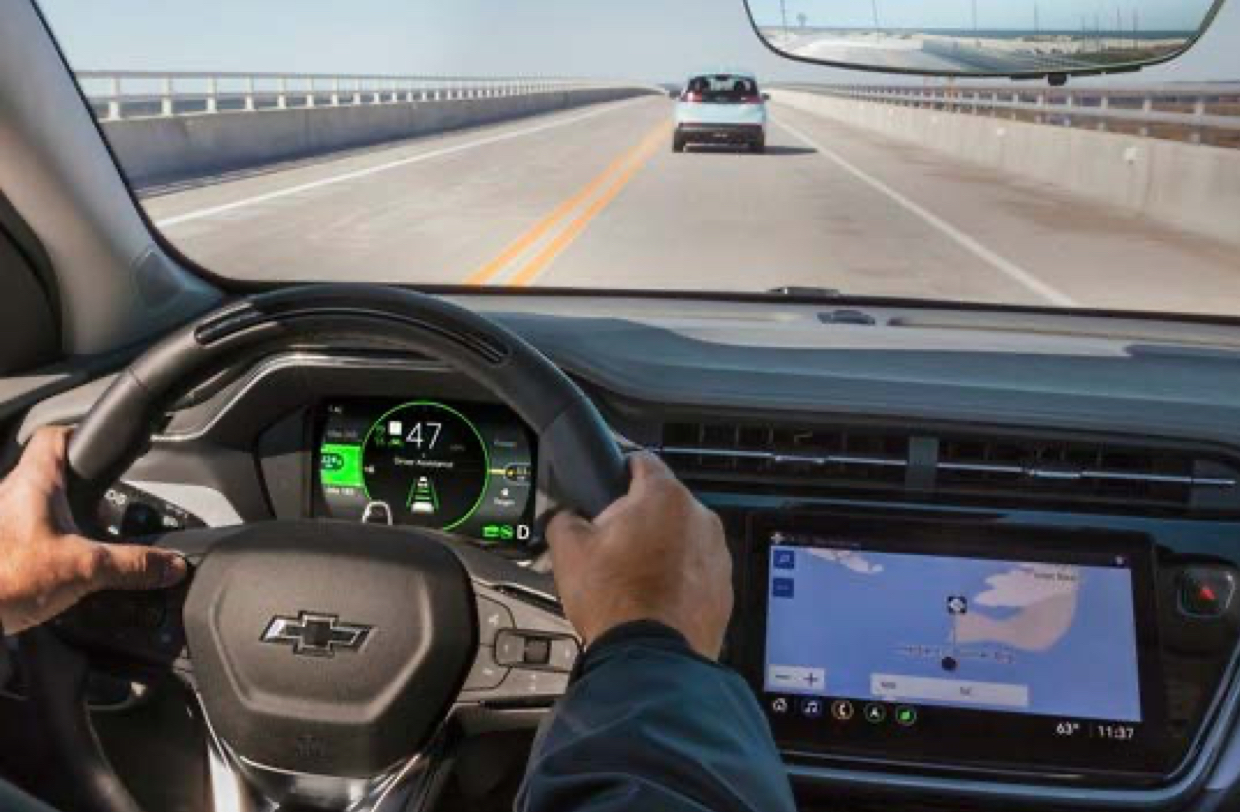
The new Chevy Bolt EUV will feature the available Super Cruise driver assistance feature. Source: General Motors
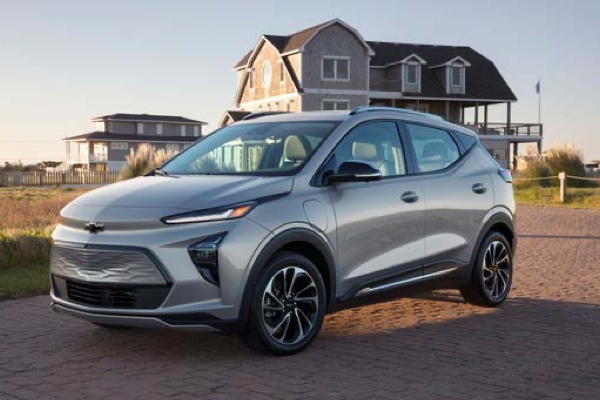
GM is accelerating the development of electric vehicles so that more drivers can share in the vision of a sustainable, zero-emission future. Source: General Motors
HESTER: The mass adoption of electric vehicles will be a transformative moment in our history, but for most drivers, it will be an entirely new experience.
BOWSHER: I’ve been allowed to see behind the curtain on the design of these new EVs and they are breathtaking. When you don’t have the gas engine and transmission to work around, the design people can go crazy and create things that we’ve never seen before. People are going to want these EVs in their driveways.
When you don’t have the gas engine and transmission to work around, the design people can go crazy and create things that we’ve never seen before.

Mike Bowsher, Chairman, Chevrolet National Dealer Council
BARNUEVO: As GM travels the path toward the zero-emission future that we all envision, accountability will be a vital component to validating progress for employees, stakeholders, and the public. Our efforts will have a meaningful impact—and that’s the best feeling in the world.